
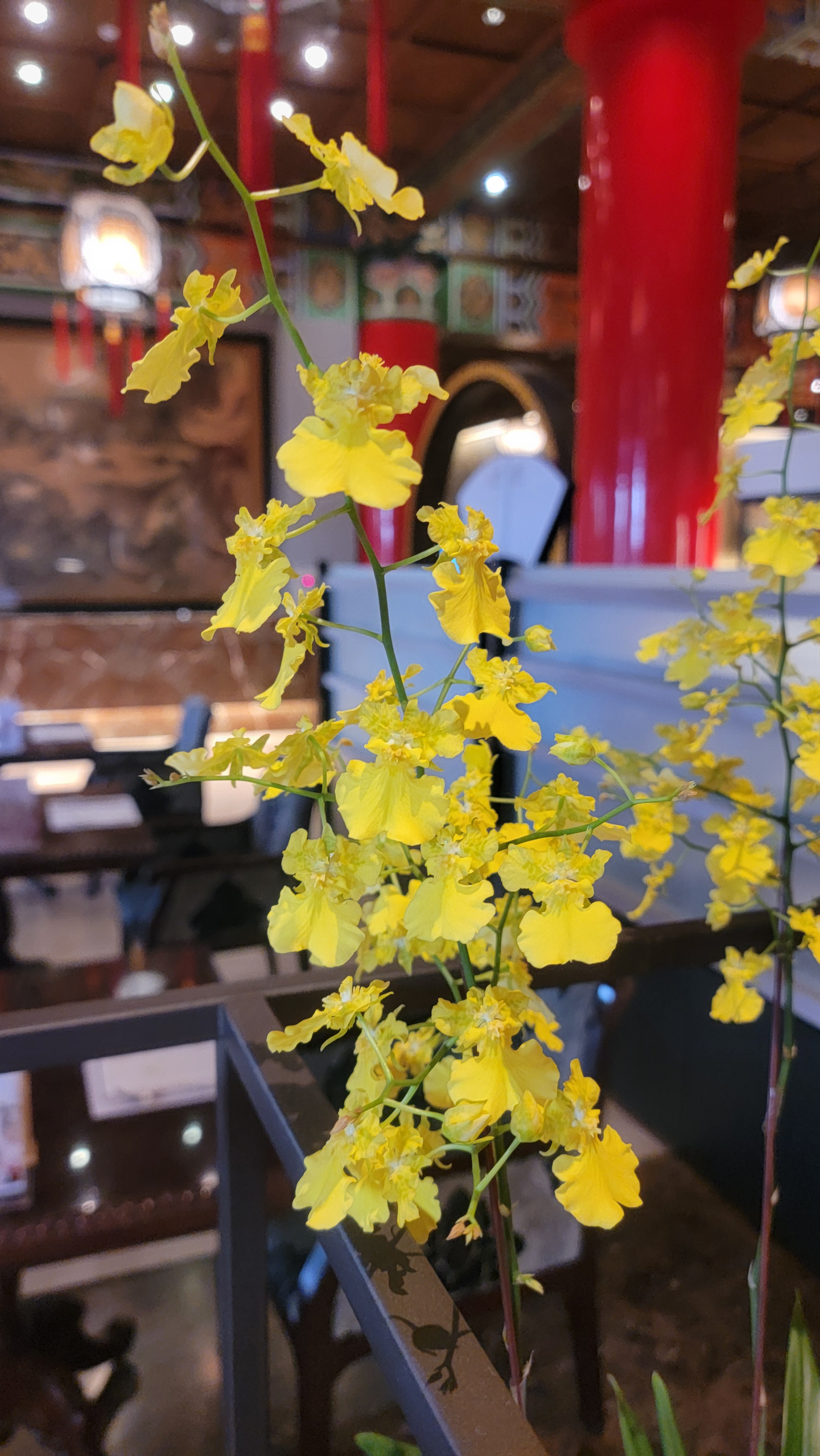
I have been looking at my WOMAN’S orchids and considering how to incorporate them into this website. For the most part the Bonsai are fairly straight forward and have somewhat limited species involved. Orchids are however hybridized, manipulated, crossed, and created from a variety of “original” species.
While I will continue to figure out a way to present her orchids, it may not have a logical path with a known structure coming into view at the end. I think I am just going to have to stay higher level and maybe focus on the care and keeping of them, who knows, maybe even propagation as well. To try and ID a plant to a specific species is probably not the right way to approach the family or even genus.
There are a few ground orchids we have come into possession of and I like them a lot. Not sure how I will feel about them in a few seasons.

Most of our orchids are not in the ground. Some are tree hangers, maybe in a coconut, maybe with some coconut fibers around their roots. Mostly though they are elevated onto something.

Then we have others that really just want to “hang out” and let their roots hang free in the breeze. The Vanda sanderiana grows best this way. This is our Waling Waling.

Then we have others that we keep in pots that contain various materials. Mostly the pots have cocofiber, charcoal, cocohusks, or just pieces of coconut chunks.
All of these plants have similarities though. the Growing media aside, many require the same filtered or indirect light and direct afternoon sun will have a poor effect on most. We use buildings, trees, sunshades, and just placement of the growing site to help them thrive.
We are never perfect in doing this and at times need to move our plants a bit. The sun makes a broad movement across the shy when you live near the equator. Almost hal of the year is south sunny, but half is north sunny. I didnt get that in the US as we lived much further north of the equator.
With that said, they dont just day because of one day of too much sun. Move them if you notice and let them recover, most will.
Comments
One response
do comments work here?